Full-Arch Dental Implants in Riyadh
Advanced digital planning, implant placement and fixed teeth — with immediate loading when clinically appropriate.
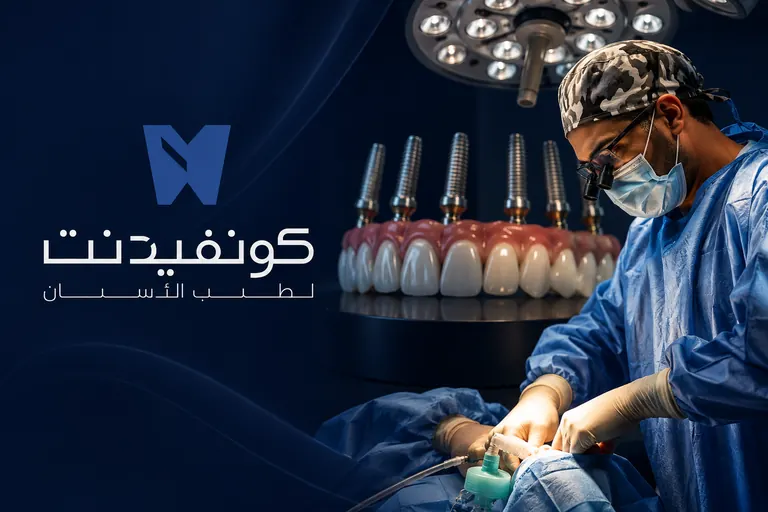
What Are Full-Arch Dental Implants?
Full-arch implant treatment replaces a complete failing or missing dental arch using multiple strategically positioned dental implants that support a fixed prosthesis. Rather than restoring teeth one by one, the arch is planned as a single restorative unit, so implant positions are chosen to serve the final teeth rather than the other way around.
Because the prosthesis is fixed to the implants, it is not removed by the patient. Planning, surgery and the prosthetic design are therefore developed together from the outset. Related reading: full-mouth dental implants — what to expect.
Who May Benefit From Full-Arch Implant Treatment?
- Complete tooth loss
- Multiple failing teeth
- Advanced periodontal disease
- Severely compromised dentition
- Difficulty with removable dentures
- Patients requiring comprehensive implant-supported rehabilitation
Individual suitability can only be determined through clinical and radiographic assessment.
Further reading: options for replacing all missing teeth.
A Digitally Planned Full-Arch Workflow
- 1
Consultation and clinical assessment
- 2
CBCT imaging
- 3
Intraoral / digital scanning
- 4
Digital, prosthetically driven planning
- 5
Implant placement
- 6
Immediate provisional fixed teeth when clinically appropriate
- 7
Healing and follow-up
- 8
Definitive fixed prosthesis
More on the digital process: immediate implants and the digital workflow.
Can Fixed Teeth Be Delivered on the Same Day?
Immediate loading means a fixed provisional restoration is attached to the implants shortly after they are placed, instead of waiting for the full healing period. Whether this is possible depends on factors assessed during planning and confirmed during surgery, including implant stability, bone quality, implant distribution and the planned occlusion.
In suitable cases, a fixed provisional restoration may be delivered on the day of implant placement.
This is not appropriate for every patient. See who is a candidate for immediate loading.
Choosing the definitive teeth? Read our guide to zirconia vs acrylic teeth for full-arch implants.
Full-Arch Rehabilitation — A Clinical Case
Upper & Lower Full-Arch Implant Rehabilitation
A 43-year-old patient presented seeking a significant improvement in his smile and overall dental appearance. The remaining dentition was extensively compromised and considered non-maintainable. Achieving a predictable functional and aesthetic rehabilitation required removal of the remaining non-maintainable teeth and comprehensive reconstruction of both arches.
- 1
Clinical Presentation
The patient presented with a compromised remaining dentition affecting both appearance and function. Following clinical and radiographic assessment, the remaining teeth were considered non-maintainable and a comprehensive upper and lower full-arch rehabilitation was planned.
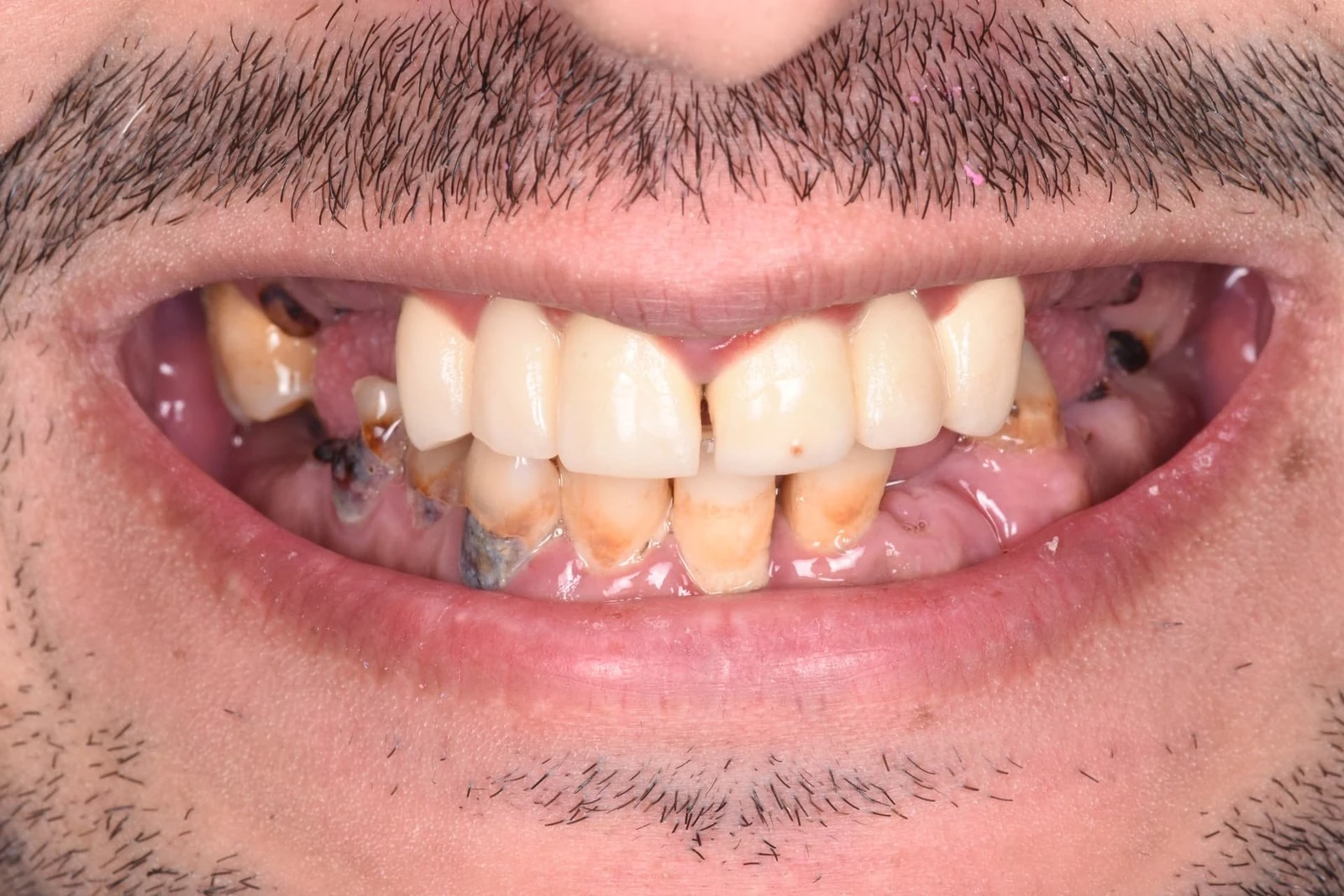
Before treatment — compromised remaining dentition prior to full-arch rehabilitation. - 2
Three-Dimensional Assessment
Three-dimensional imaging was incorporated into the diagnostic and planning process to evaluate the existing dentition, supporting anatomy and the relationship between the planned prosthetic reconstruction and potential implant positions.
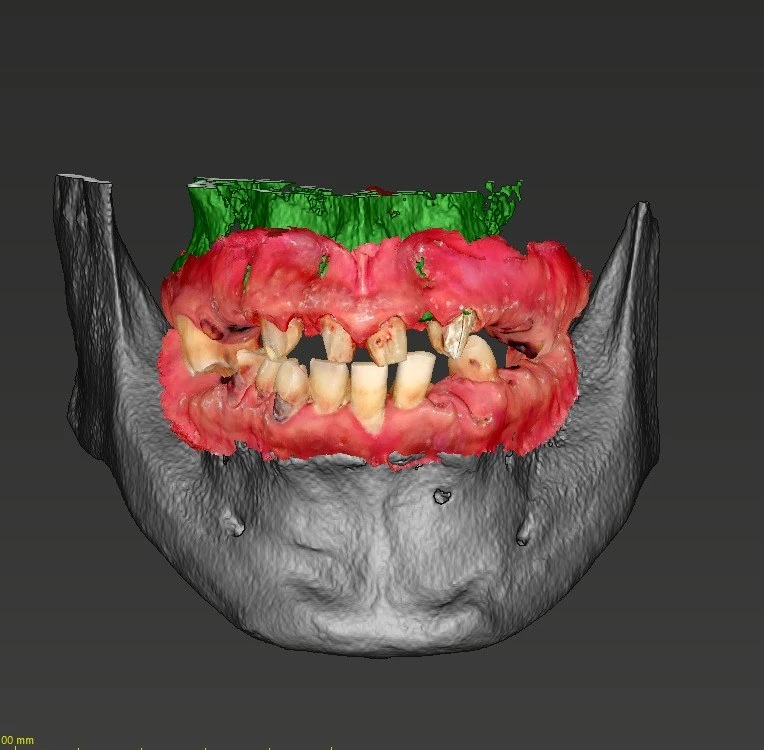
Three-dimensional assessment of the existing dentition and supporting anatomy during treatment planning. - 3
Digital Prosthetic and Implant Planning
The case was digitally planned with the intended tooth position and prosthetic design considered alongside implant positioning. This prosthetically driven approach allows implant placement, restorative space, aesthetics and function to be considered together before treatment.
The desired teeth are planned first, and implant positioning is then coordinated with the intended prosthetic result.
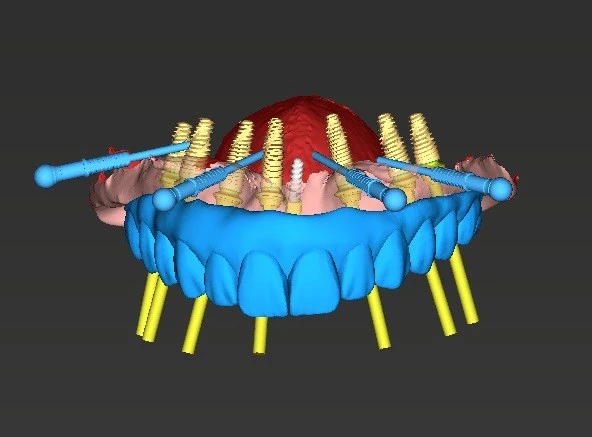
Digital prosthetic and implant planning — the intended tooth position is established alongside implant positioning before treatment. - 4
Upper and Lower Full-Arch Implant Rehabilitation
The patient underwent full-arch implant rehabilitation of both the upper and lower arches. Rather than treating individual teeth independently, the case was approached as a complete prosthodontic rehabilitation, with implant positioning, prosthetic design, aesthetics, function and occlusion considered together.
- 5
Fixed Teeth on the Same Day
The clinical conditions allowed immediate loading in this case. Fixed provisional restorations were therefore delivered on the day of implant placement, allowing the patient to leave with fixed teeth rather than going through the healing period without teeth.
The provisional restorations also provided an opportunity to evaluate aesthetics, tooth position, speech, function and occlusion during healing before proceeding to the definitive restorations.
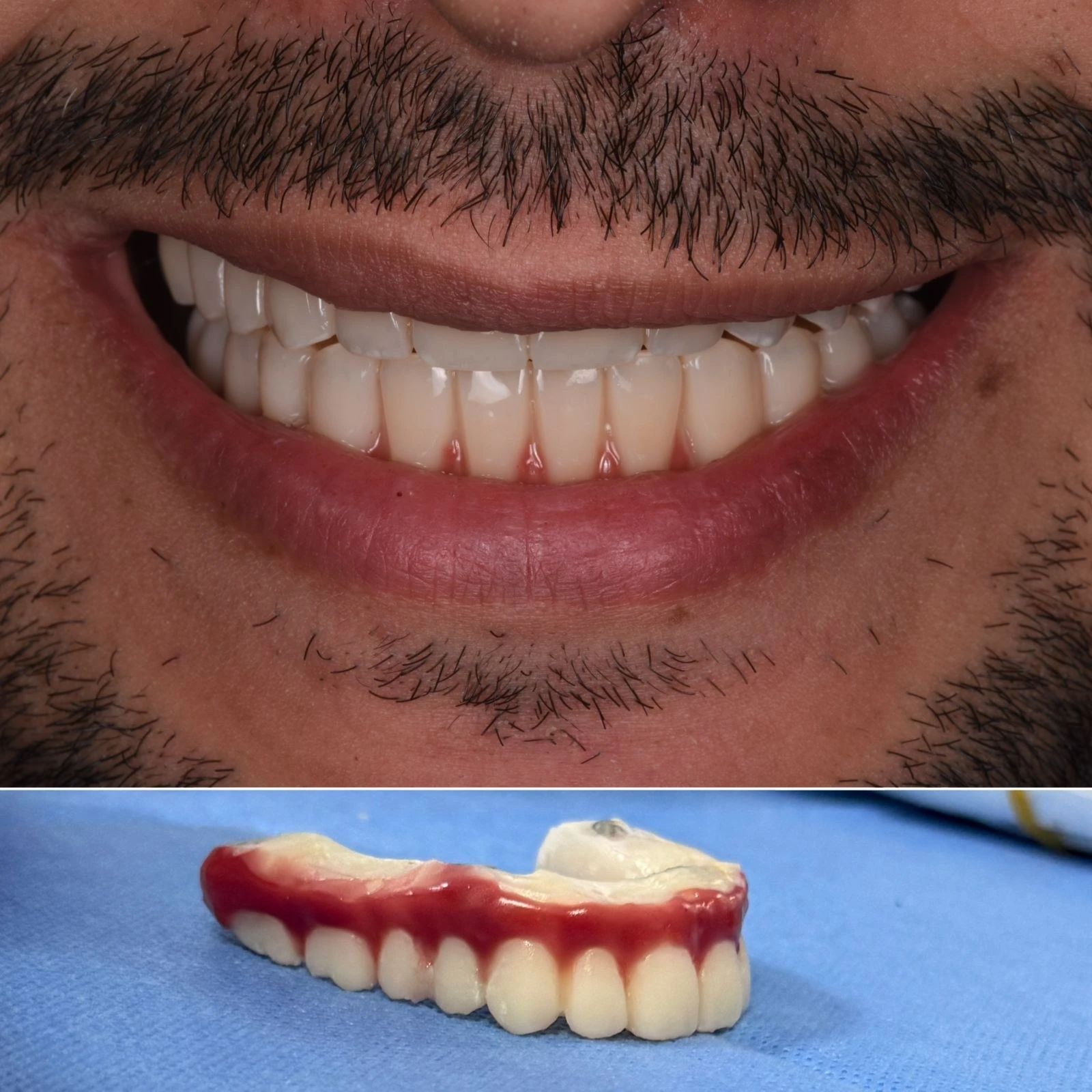
Fixed provisional restoration delivered during the immediate-loading phase. Immediate loading is not suitable for every patient. Eligibility depends on individual clinical, anatomical and implant-related factors assessed at the time of treatment.
- 6
Definitive Zirconia Prostheses
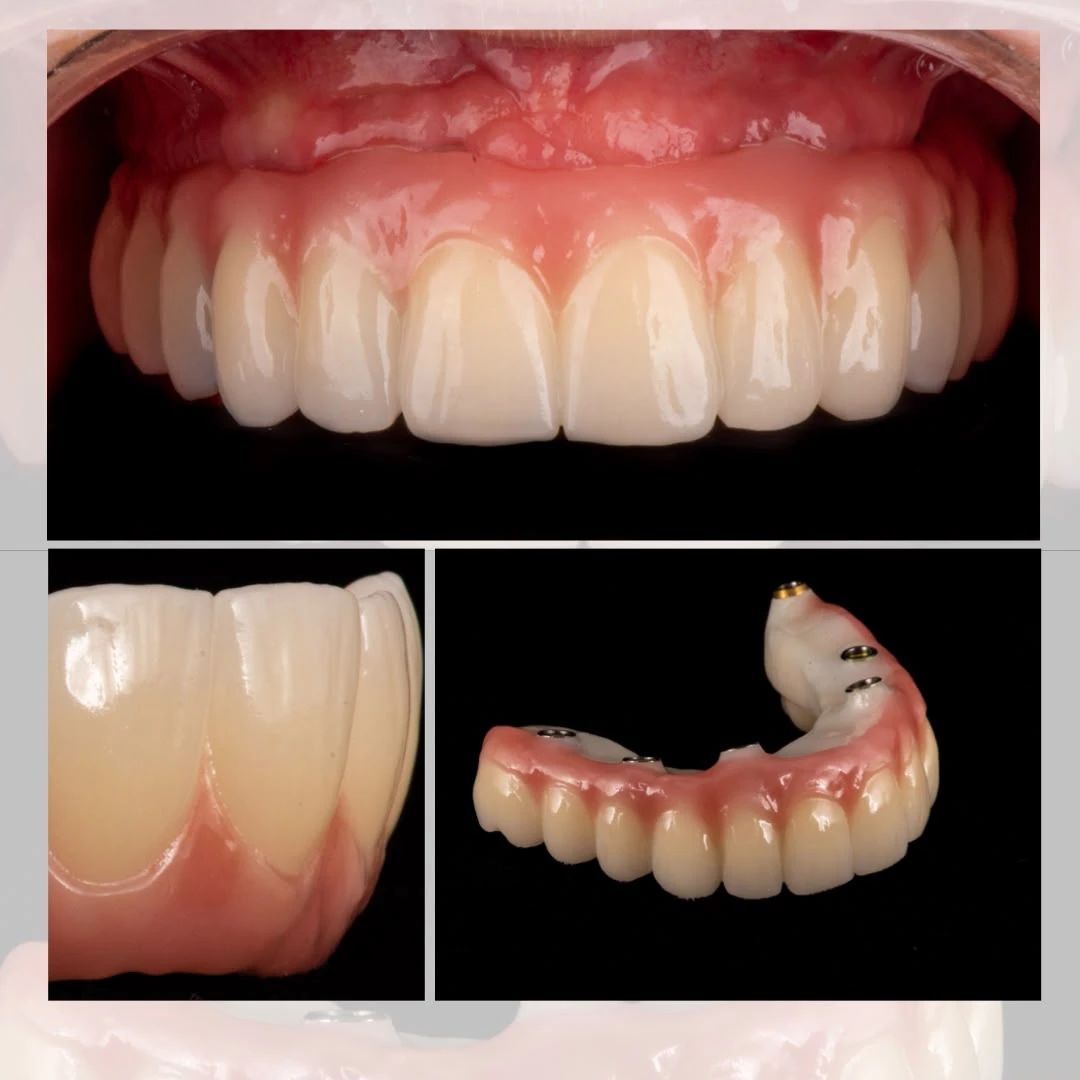
Following healing and reassessment, the rehabilitation was completed with definitive upper and lower zirconia full-arch prostheses. The definitive restorations were designed to restore aesthetics and function while providing a fixed implant-supported rehabilitation for both arches.
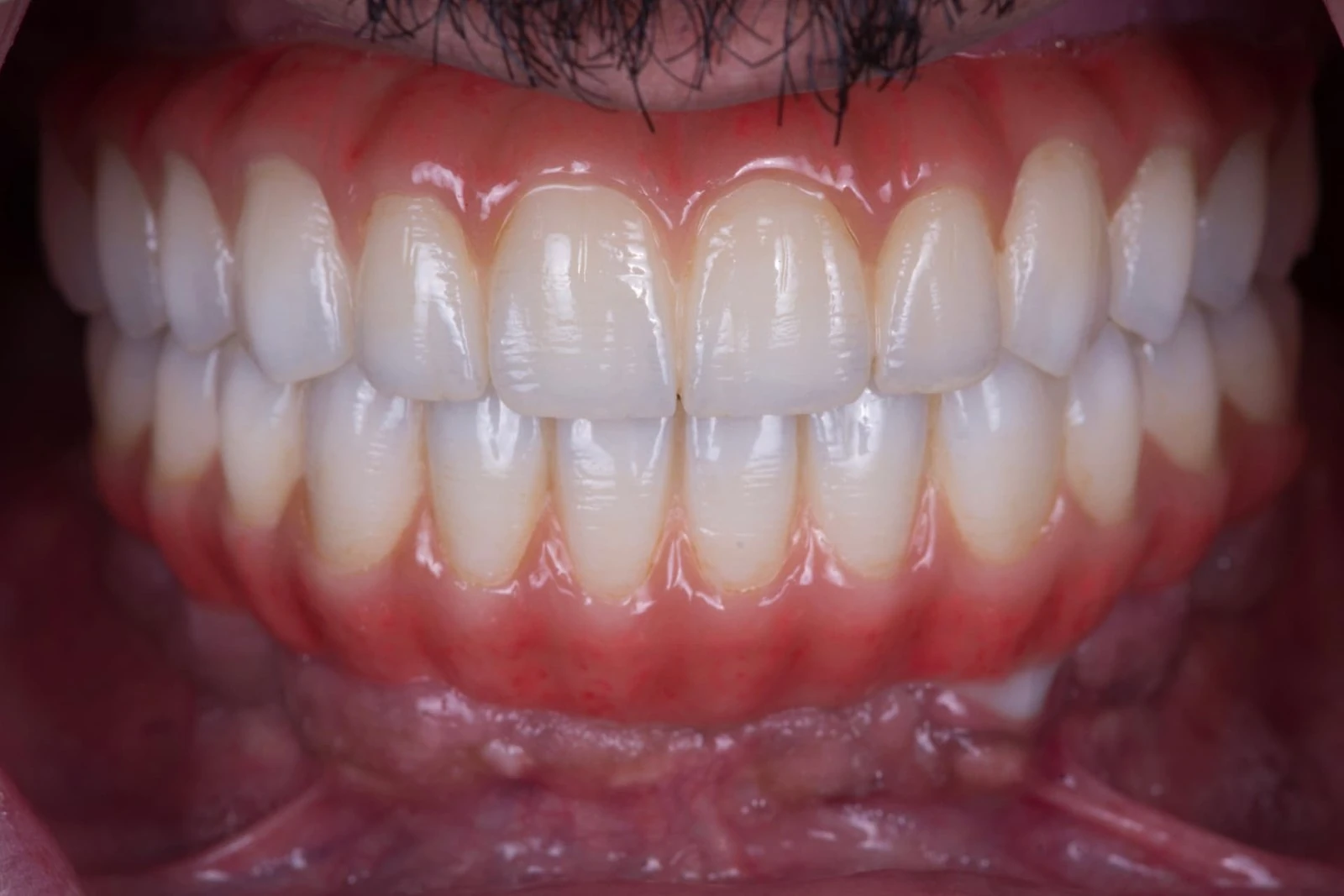
Definitive upper and lower zirconia full-arch prostheses after completion of treatment. - 7
Final Result
The completed rehabilitation demonstrates the transition from a compromised, non-maintainable dentition to a fixed upper and lower implant-supported reconstruction planned around the patient's functional and aesthetic requirements.
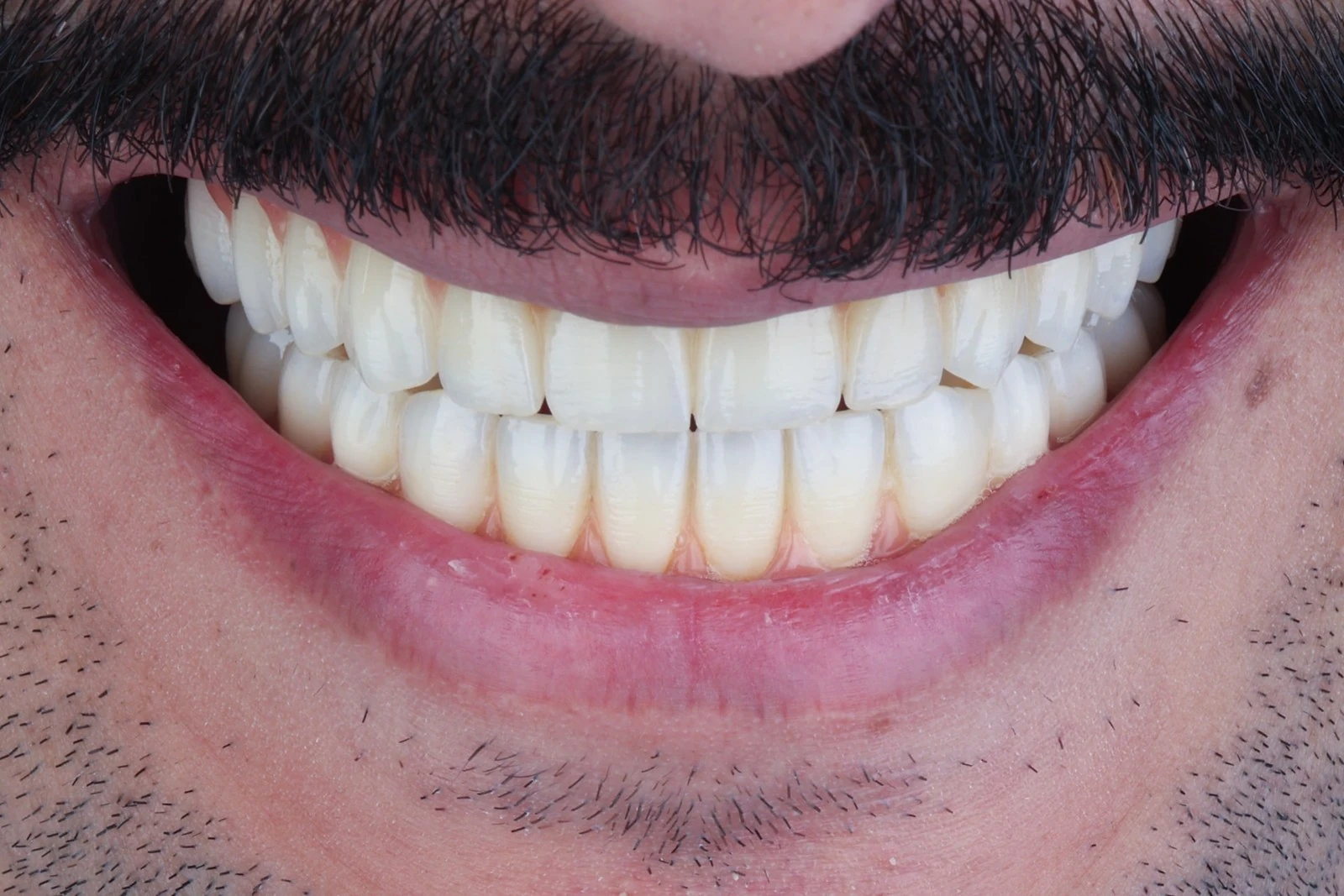
Final smile following upper and lower full-arch implant rehabilitation.
Before & After Full-Arch Rehabilitation
This case demonstrates the aesthetic and functional transformation achieved through comprehensive upper and lower full-arch implant rehabilitation.
Case Summary
- Age
- 43 years
- Treatment
- Upper and lower full-arch implant rehabilitation
- Planning
- Digital prosthetic and implant planning
- Loading protocol
- Immediate loading
- Provisional
- Fixed same-day provisional restorations
- Definitive restoration
- Upper and lower zirconia full-arch prostheses
This case illustrates one treatment pathway. Full-arch implant treatment is individually planned, and immediate loading, implant distribution, prosthetic design and definitive restorative strategy depend on each patient's clinical and radiographic findings.
All-on-4, All-on-6 or an Individualized Implant Plan?
Full-arch rehabilitation is often described by a fixed implant number, but the number itself is an outcome of planning rather than a treatment choice made in advance. The appropriate configuration is determined after assessing:
- Bone anatomy
- Bone quality
- Implant distribution
- Prosthetic design
- Opposing dentition
- Biomechanical considerations
- Patient-specific clinical factors
Two patients with the same missing teeth may require different implant numbers, positions and prosthetic designs. The plan is individual.
What If There Is Severe Bone Loss?
Significant bone loss does not automatically exclude a patient from fixed implant rehabilitation. It does, however, change how the case is assessed and planned, and it makes detailed three-dimensional imaging essential.
Conventional implant positioning
Where sufficient bone remains, implants are placed in standard positions along the arch. CBCT planning identifies the denser bone available and keeps a safe distance from the sinus and inferior alveolar nerve.
Bone augmentation
When volume is insufficient, grafting procedures such as sinus floor elevation or ridge augmentation can rebuild the site. This adds healing time before or alongside implant placement, and is chosen when it produces a better long-term prosthetic result.
Alternative implant strategies
In advanced resorption, angled implants or implants engaging remaining anatomical support may allow a fixed prosthesis without extensive grafting. These techniques are technique-sensitive and reserved for carefully selected cases.
Advanced individualized planning
Some cases fall outside routine protocols and require patient-specific solutions designed from the CBCT dataset, including custom frameworks. These are planned in detail and discussed openly, including the alternatives.
Which approach applies — if any — can only be decided after clinical and radiographic assessment.
Related: implant options in severe bone loss.
The Definitive Fixed Prosthesis
After healing and reassessment, the provisional restoration may be replaced by the definitive prosthesis. The provisional phase is informative: it tests aesthetics, speech, occlusion and hygiene access before the final design is confirmed.
Zirconia and other material options
Monolithic zirconia offers high strength and stain resistance; titanium-reinforced acrylic hybrids are more easily repaired and gentler on opposing teeth. The choice follows the case rather than a fixed preference.
Prosthetic design
Tooth position, gum contour, lip support and the transition line where the prosthesis meets the tissue are all designed deliberately, using the provisional as the reference.
Aesthetics
Tooth shape, shade, midline and smile line are set with the patient's facial proportions and preferences in mind, and confirmed before the definitive prosthesis is made.
Function
Occlusion is arranged so chewing forces are distributed across the implants, protecting both the prosthesis and the opposing dentition. Night guards are advised where clenching or grinding is present.
Cleansability
The underside of the prosthesis is contoured so brushes and irrigation can reach beneath it. A design that cannot be cleaned at home is not a successful design, however good it looks.
Maintenance
Regular reviews allow the fit, screws, occlusion and tissue health to be checked, and the prosthesis to be professionally cleaned. Maintenance is part of the treatment, not an optional extra.
No single material is universally superior; the choice depends on the case, the opposing dentition and the prosthetic design.
Full-Arch Treatment Is More Than Implant Placement
The long-term result of a full-arch case depends as much on the prosthetic plan as on the surgery itself. These elements are coordinated as one treatment:
- Surgical planning
- Implant positioning
- Prosthetic planning
- Occlusion
- Aesthetics
- Biomechanics
- Digital workflow
- Long-term maintenance
This coordination is the core of prosthodontic practice — planning the final teeth first, then delivering the surgery and restorations that achieve them.
What Does the Treatment Journey Look Like?
- Step 1
Consultation
- Step 2
Diagnostics
- Step 3
Digital planning
- Step 4
Implant surgery
- Step 5
Immediate provisional when appropriate
- Step 6
Healing
- Step 7
Definitive prosthesis
- Step 8
Maintenance
Most full-arch cases run between 3 and 9 months from surgery to the definitive prosthesis, depending on healing, bone quality and whether grafting is needed. A fixed provisional bridge is placed on the day of surgery whenever implant stability allows, so patients rarely leave without teeth. Dr. Adnan Bazarbashi, consultant prosthodontist, plans, places and restores each case personally, and exact timeframes are confirmed after clinical assessment and imaging.
Frequently Asked Questions About Full-Arch Dental Implants
For a fuller explanation of what influences pricing, read our guide to the cost of full-mouth dental implants in Riyadh.
In full-arch implant rehabilitation, the prosthetic plan is as important as the surgery itself. A treatment designed around the final teeth — rather than retrofitted to them — is what delivers a predictable, long-lasting result.
— Dr. Adnan Bazarbashi, Consultant Prosthodontist & Implant Dentist, Riyadh
About Dr. Adnan Bazarbashi
Dr. Adnan Bazarbashi is a Consultant Prosthodontist & Implant Dentist practising in Riyadh. His clinical focus includes:
- Prosthodontics
- Implant dentistry
- Full-mouth rehabilitation
- Digital implant workflows
- Complex restorative treatment
Read his full profile or browse his educational articles.
Educational work featured in Al Riyadh Newspaper.
Considering Full-Arch Dental Implant Treatment?
Every full-arch case begins with an individual consultation, clinical examination and imaging, so the plan reflects your anatomy and your goals rather than a fixed protocol.