July 15, 2026 · 9 min read
The Best Way to Replace All Missing Teeth: Comparing Your Options
Losing all your teeth in one jaw does not leave you with a single option. Today there are three well-documented paths — and the right one depends on your bone, your health, your habits and your budget, not on marketing.
When every tooth in a jaw is missing or beyond saving, most patients arrive with one question: what is the best way to replace them all? The honest answer is that there is no single best solution for everyone. There are three well-established treatment families, each with a different level of stability, a different price and a different biological cost. Choosing well means matching the option to your jawbone, your general health and the way you want to live.
If only one tooth is missing, the planning is different — this single front tooth implant case shows how one gap is restored.
Option 1 — The conventional complete denture
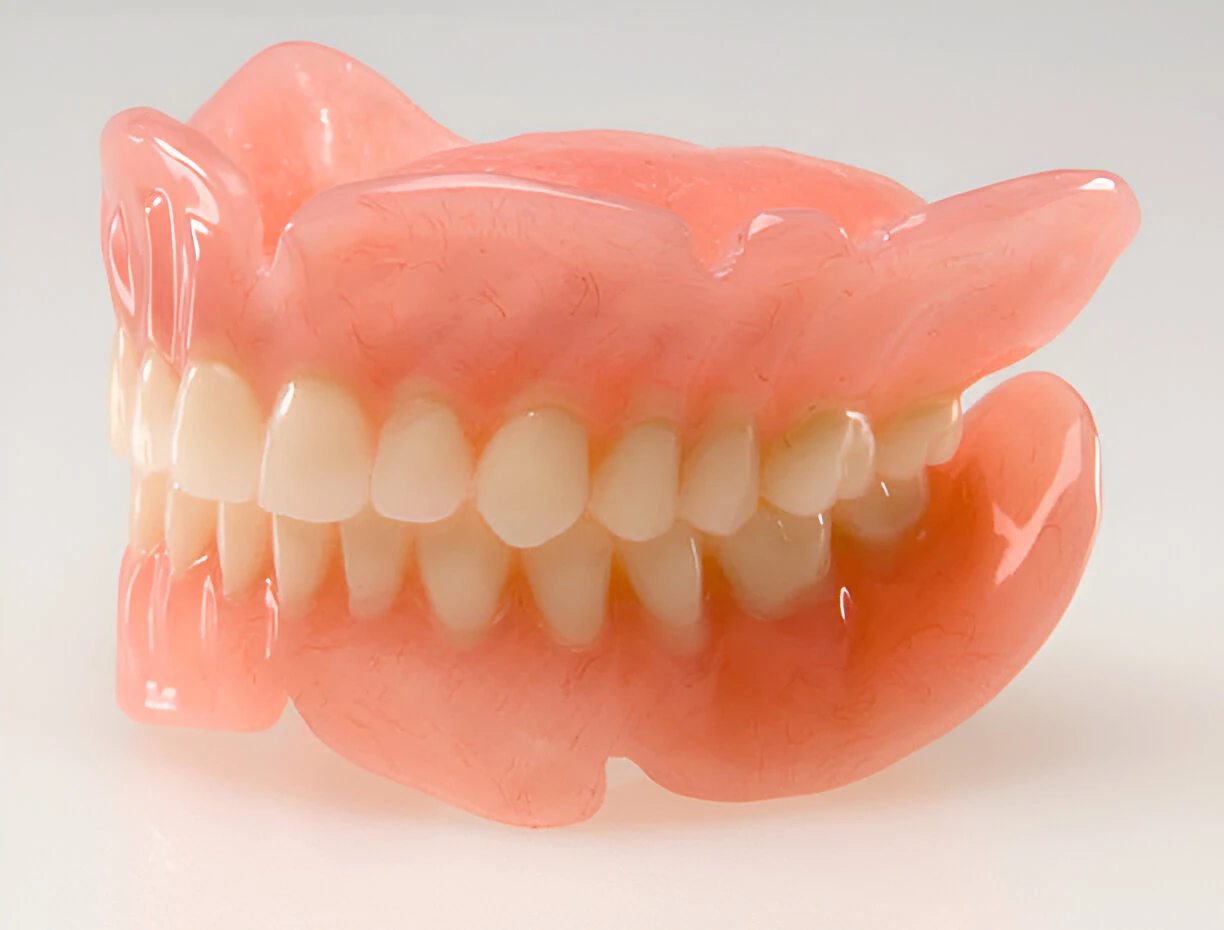
The classic removable denture rests on the gums and is held by suction and muscle control. It remains the least expensive and least invasive option, it requires no surgery, and it can be delivered in a few weeks. For many patients it is a reasonable and dignified solution — especially when surgery is not advisable for medical reasons.
Its limits are well documented. Chewing efficiency is roughly a fifth of natural teeth, a lower denture is often unstable because the tongue and lower lip displace it, and — most importantly — the jawbone underneath continues to shrink year after year because nothing is stimulating it. Over time the denture loosens, the lower face shortens, and relines or remakes become necessary.
Option 2 — The implant-supported overdenture
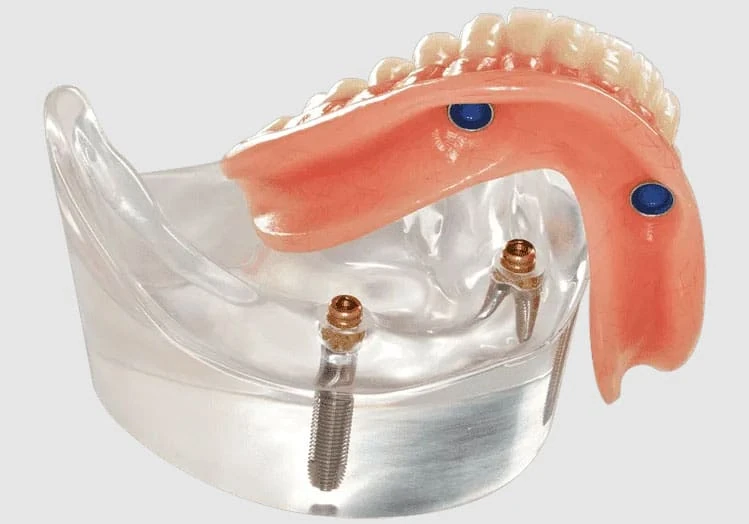
Two to four implants are placed in the jaw and the denture clips onto them. It is still removable — you take it out to clean it — but it no longer moves while you eat or speak. For the lower jaw in particular, the two-implant overdenture is widely regarded in the literature as a sensible minimum standard of care, because it solves the single biggest complaint of denture wearers: instability.
It costs considerably less than a fixed full-arch reconstruction, it is easier to clean, and it can often be done with less bone than a fixed solution requires. The trade-offs: it is still a removable appliance covering part of the palate or ridge, and the clip attachments need replacing periodically.
Option 3 — The fixed full-arch implant bridge
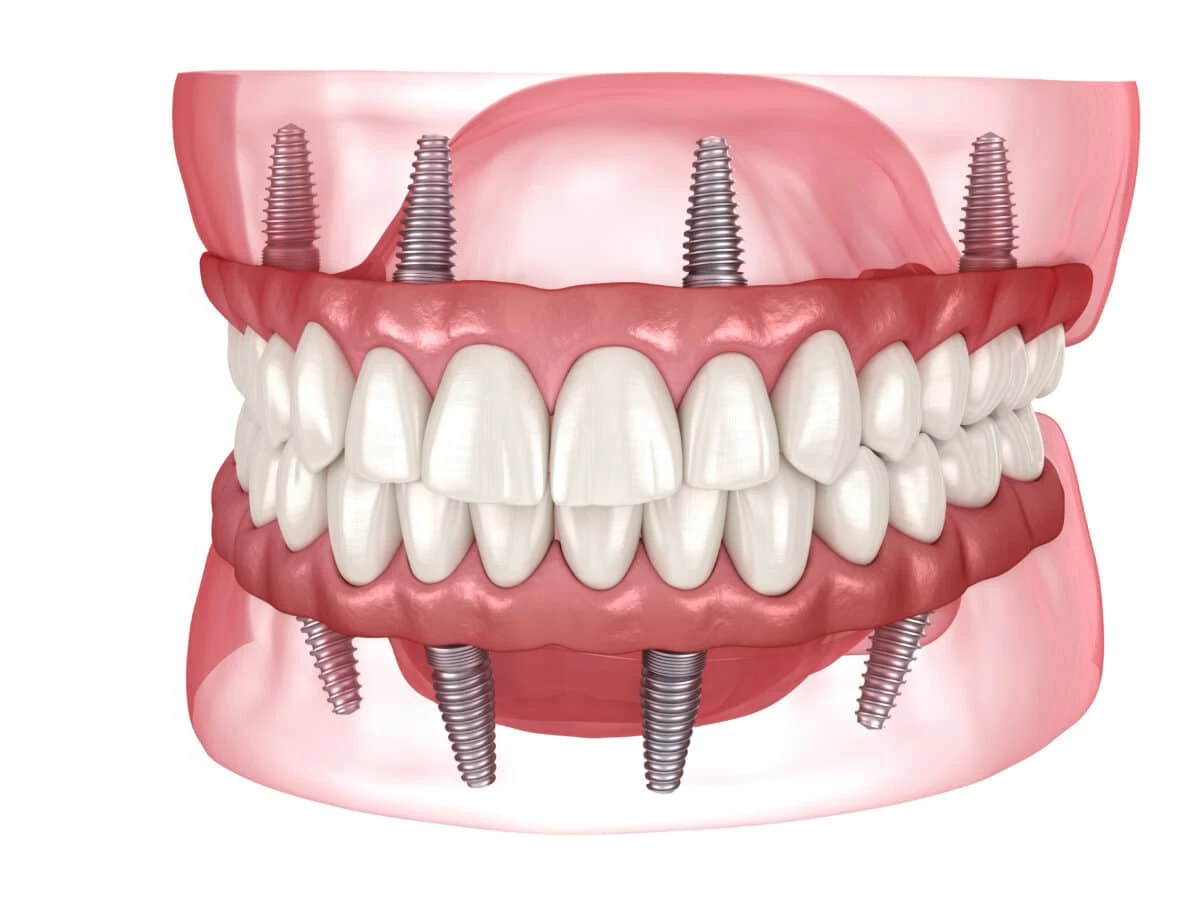
Four to six implants carry a bridge that is screwed into place and stays there — you brush it like natural teeth and it is never removed at home. This is the closest reproduction of fixed natural dentition available today. Chewing power approaches that of natural teeth, the palate stays uncovered so taste and speech feel normal, and the implants preserve the bone that supports your facial profile.
It is the most demanding option: it needs adequate bone volume or grafting, meticulous surgical and prosthetic planning, and a higher investment. It also demands real hygiene discipline, because peri-implant tissues punish neglect faster than natural gums do.
How the decision is actually made
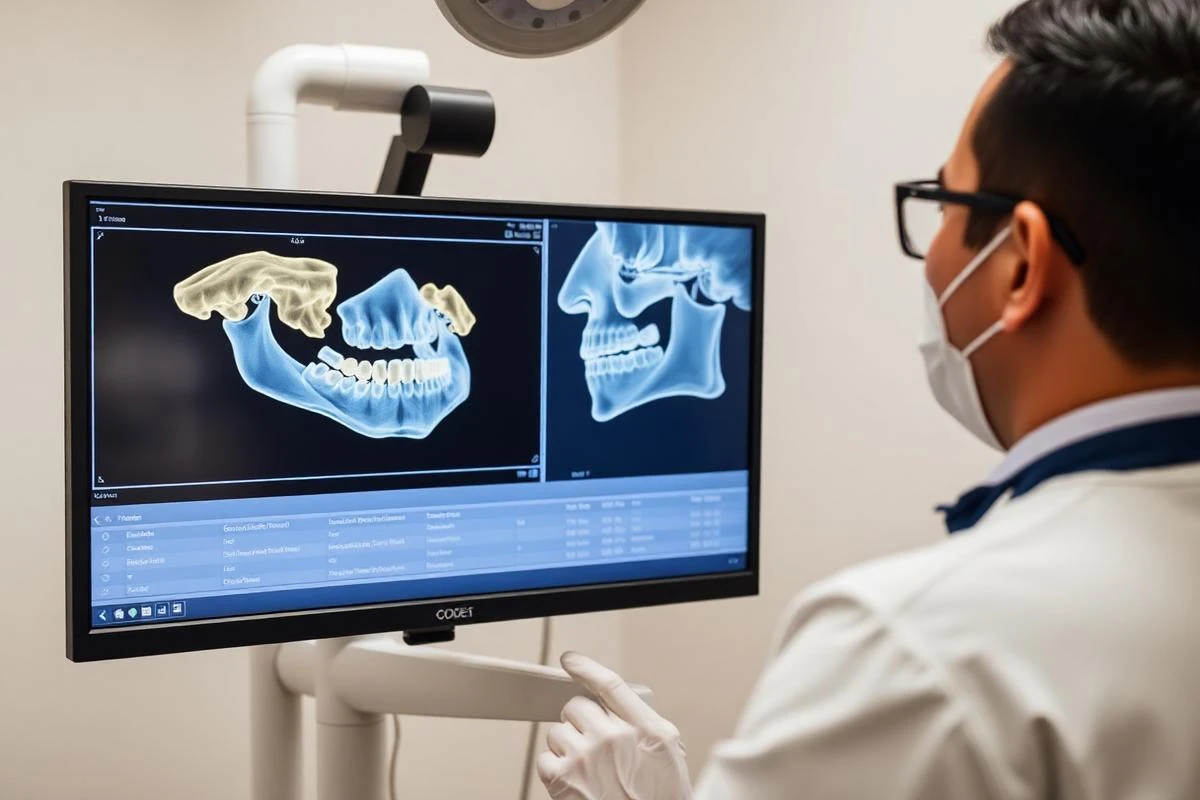
A responsible plan starts with a 3D CBCT scan, not with a price list. The scan shows how much bone is available in height and width, where the nerve and sinus sit, and whether grafting is required. Alongside it, the clinician reviews your medical history, medications such as bisphosphonates or anticoagulants, smoking, diabetes control, bite forces and any clenching habit.
- Bone volume and quality — the single biggest determinant of whether a fixed bridge is realistic.
- General health and healing capacity — uncontrolled diabetes or heavy smoking materially raise implant failure rates.
- Manual dexterity and hygiene ability — a fixed bridge is unforgiving of poor cleaning.
- Bite force and clenching — heavy bruxism changes both the material choice and the number of implants.
- Budget and timeline — including maintenance costs over ten to fifteen years, not just the first invoice.
Can you leave with teeth the same day?
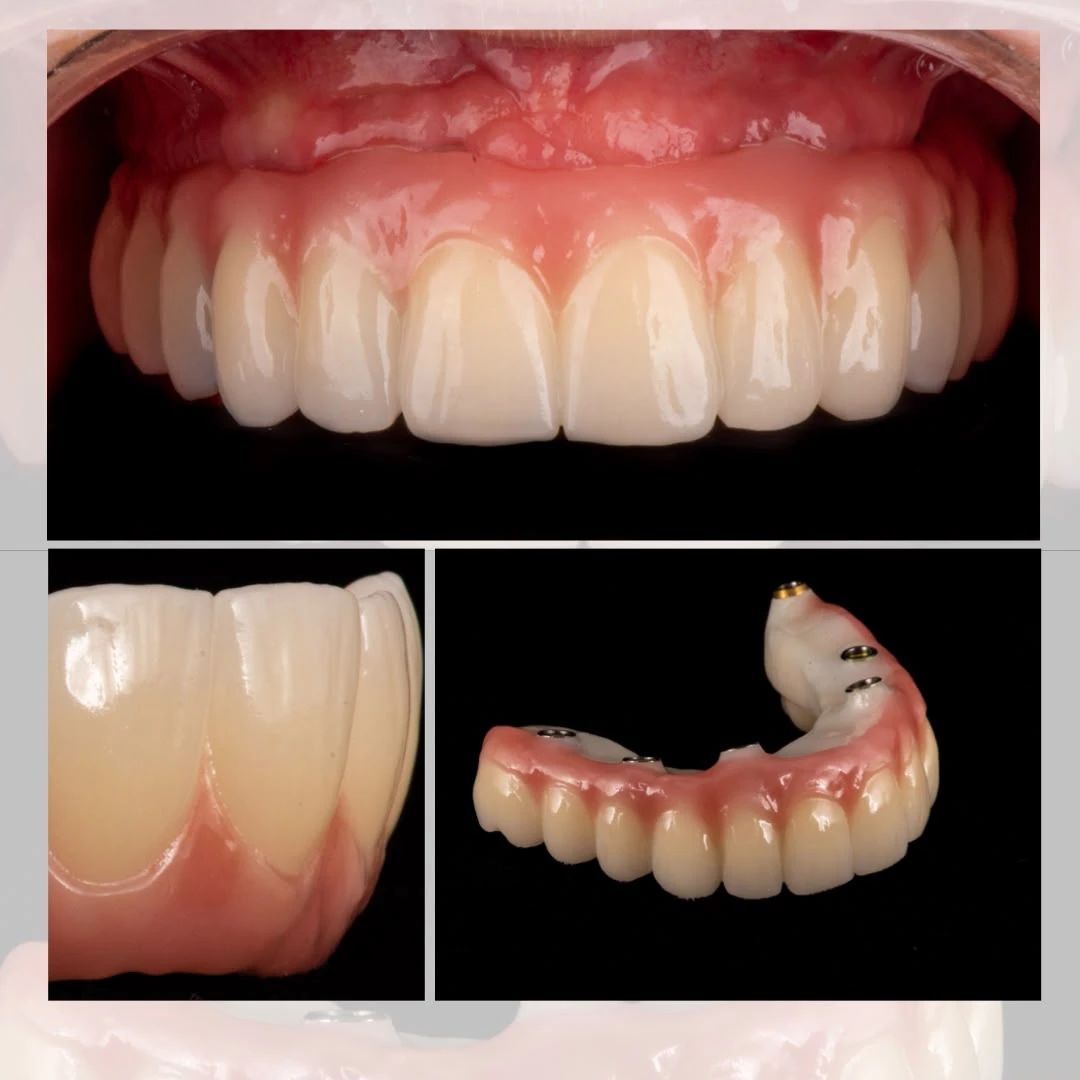
Often, yes. When the implants achieve sufficient primary stability at placement, a fixed provisional bridge can be attached on the day of surgery. This is what patients refer to as immediate loading. It is a genuine advantage — you never appear in public without teeth — but it is conditional, not guaranteed. If stability is inadequate, delaying the provisional by a few weeks is the safer decision and a good clinician will say so on the day.
The provisional is temporary by design. It is deliberately made in a softer material, kept slightly out of heavy contact, and replaced after healing.
The final prosthesis and what it is made of
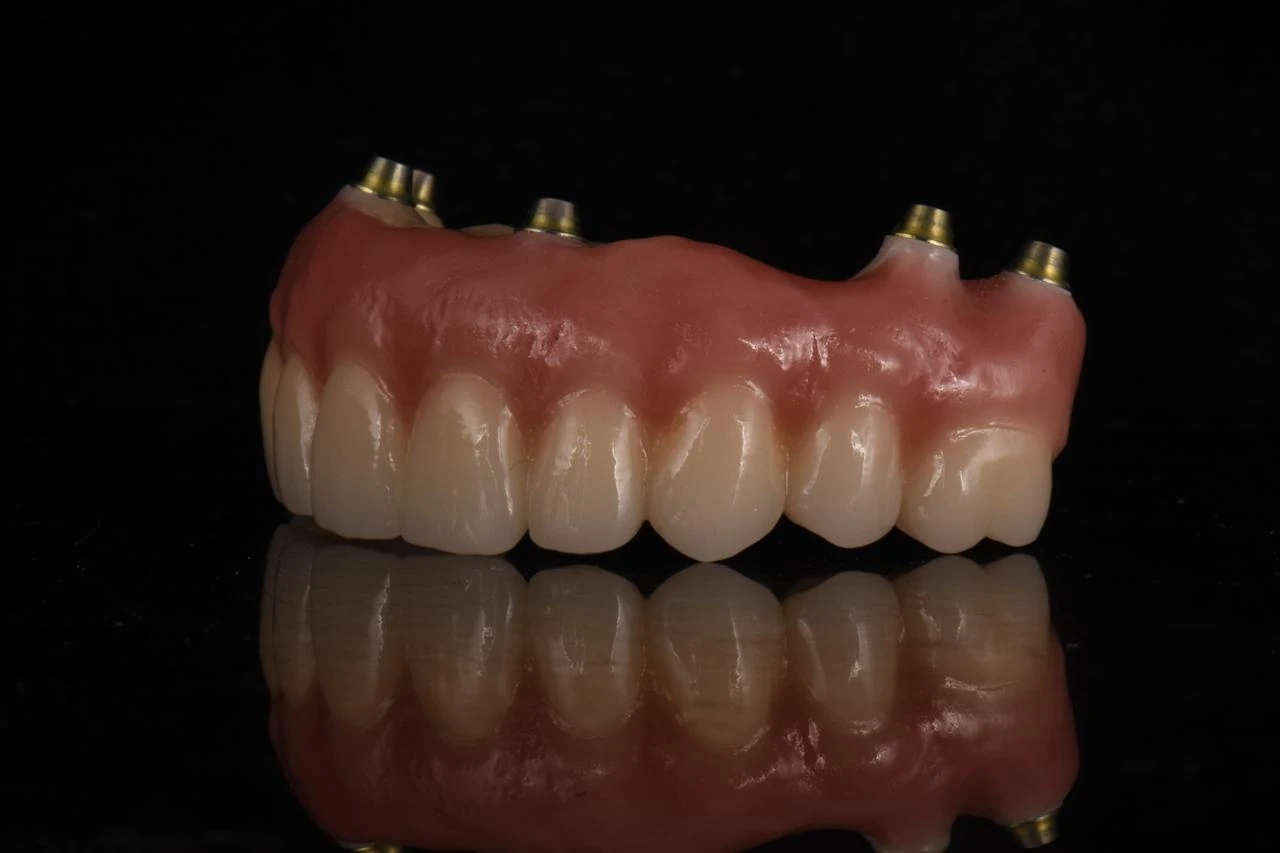
After three to six months of osseointegration, the definitive prosthesis is made. Monolithic zirconia is the current workhorse for full-arch cases: extremely strong, stain resistant and hygienic. Titanium-reinforced acrylic remains a valid choice where lip support requires bulk or where future adjustment is anticipated. The choice is clinical, based on your bite, your smile line and how much soft tissue must be replaced.
Long-term maintenance is part of the treatment
Whichever option you choose, it is not a one-time purchase. Overdenture attachments wear and are replaced. Fixed bridges are unscrewed and professionally cleaned periodically. Implants require the same hygiene follow-up as natural teeth — arguably more. Ask about the maintenance schedule and its cost before you commit, not afterwards.
Book a personalised consultation in Riyadh

If you are weighing up how to replace all your missing teeth, the useful next step is an individual assessment with 3D imaging and a written plan you can take away and think about. Dr. Adnan Bazarbashi offers unhurried consultations at Confident Clinic in Riyadh.
If a fixed solution is what you are leaning towards, our page on fixed teeth supported by dental implants explains how a full arch is planned, provisionalised and finished.
Editorial disclaimer
This article is general educational information and is not personal medical or dental advice. Diagnosis, candidacy and treatment recommendations require an in-person examination by a qualified dentist, with appropriate imaging and a medical history review. Outcomes, timelines and experiences vary between individuals.