September 8, 2026 · 9 min read
Zirconia vs Acrylic Full-Arch Dental Implants: Which Is Better?
Zirconia or metal-acrylic teeth for full-arch dental implants? A calm comparison of strength, wear, appearance, repair and long-term maintenance — with a real Riyadh case.
If you are considering full-mouth dental implants, you may hear your dentist mention two common options for your final fixed teeth: zirconia and metal-acrylic.
Both can provide a complete set of fixed teeth supported by dental implants. However, there are important differences in how they look, feel, wear, and perform over time.
One of the most common questions patients ask when considering full-arch dental implants in Riyadh is: “Which is better: zirconia or acrylic?”
For many patients, zirconia is an excellent choice for the final teeth because it is strong, highly resistant to wear, and maintains its appearance well over time. Acrylic still has advantages, however, and may be appropriate in certain situations.
The right choice depends on the patient, the implants, the bite, available space, and the overall treatment plan.
What Are Metal-Acrylic Implant Teeth?
Metal-acrylic teeth have been used successfully with dental implants for many years. The prosthesis normally has a strong metal framework underneath, with acrylic material forming the visible teeth and gums.
One advantage of acrylic is that it is relatively easy to repair if a tooth chips or breaks. It also generally has a lower initial cost than zirconia.
However, acrylic is a softer material. Over time, the teeth can gradually wear, stain, chip, or occasionally fracture — especially in patients with strong bites or teeth grinding.
What Can Happen to Acrylic Teeth Over Time?
Some patients use acrylic implant teeth successfully for many years. Others may experience:
- Worn-down teeth
- Chipping
- Cracks or fractures
- An acrylic tooth breaking off
- Changes in the bite
- Staining or discoloration
- The need for repeated repairs
What Are Zirconia Implant Teeth?
Zirconia is a very strong dental ceramic commonly used to make definitive fixed teeth over dental implants. The restoration can be digitally designed and precisely manufactured using CAD/CAM technology.
Compared with acrylic, zirconia offers:
- Very high strength
- Excellent resistance to wear
- Excellent stain resistance
- A smooth polished surface
- Very good color stability
- Natural-looking dental aesthetics
For these reasons, zirconia has become a popular material for definitive full-arch implant restorations.
What Does the Difference Actually Look Like?
The easiest way to understand the difference is to see the two restorations outside the mouth.
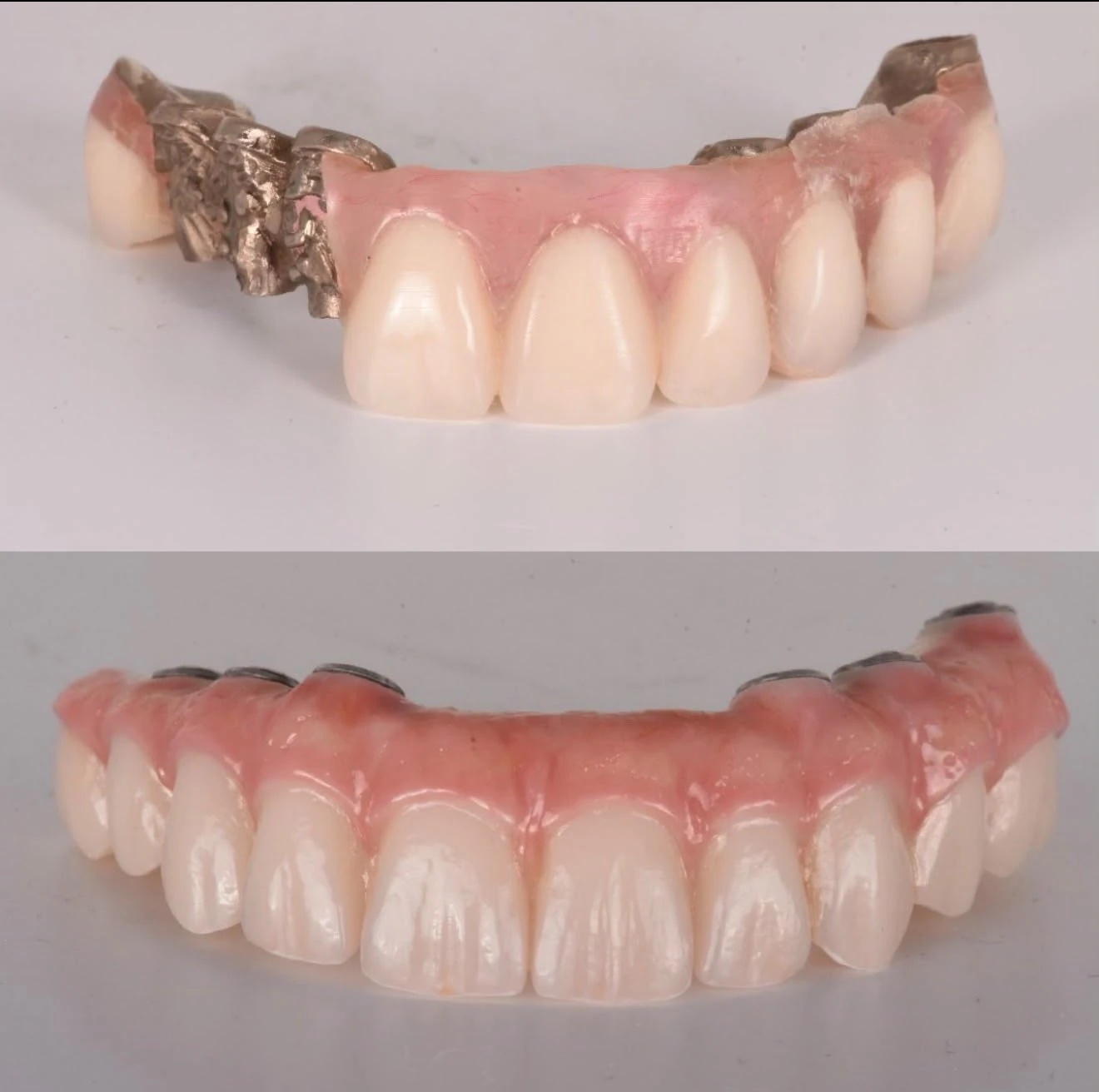
A metal-acrylic bridge has a metal framework underneath, with acrylic forming the teeth and gums around it. A zirconia bridge is digitally designed and manufactured primarily from high-strength dental zirconia. Both can replace a complete arch of teeth, but the materials behave differently over time.
Zirconia vs Acrylic: Simple Comparison
| Feature | Zirconia | Metal-Acrylic |
|---|---|---|
| Strength | Very high | Good |
| Wear resistance | Excellent | More wear over time |
| Stain resistance | Excellent | Can stain over time |
| Appearance | Very natural | Good |
| Tooth wear | Low | Higher |
| Repair | More difficult | Easier |
| Maintenance | Usually lower | May require more repairs |
| Initial cost | Higher | Usually lower |
Neither material is automatically right for every patient. The best choice depends on the implants, bite, available space, treatment design, patient habits and budget. If you are also weighing the investment involved, see our guide to the cost of full-mouth dental implants in Riyadh.
From Fractured Acrylic Teeth to Zirconia: A Real Patient Example
The case below shows one of the reasons some patients decide to move from metal-acrylic teeth to zirconia.
The patient presented with an existing implant-supported metal-acrylic prosthesis. Part of the acrylic had fractured, exposing the underlying metal framework.
After evaluating the existing implants and prosthetic situation, the old restoration was replaced with a new zirconia full-arch prosthesis.
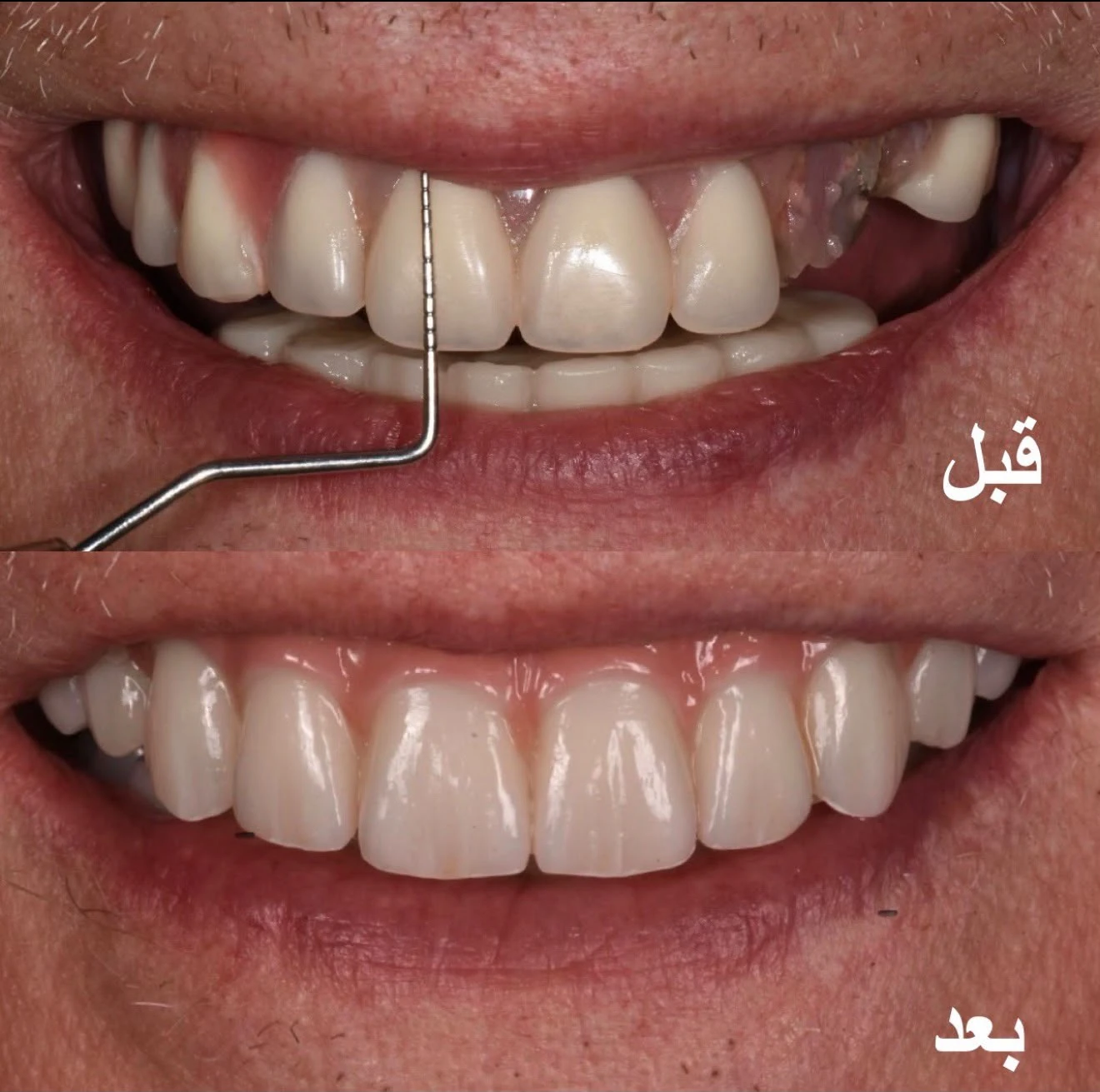
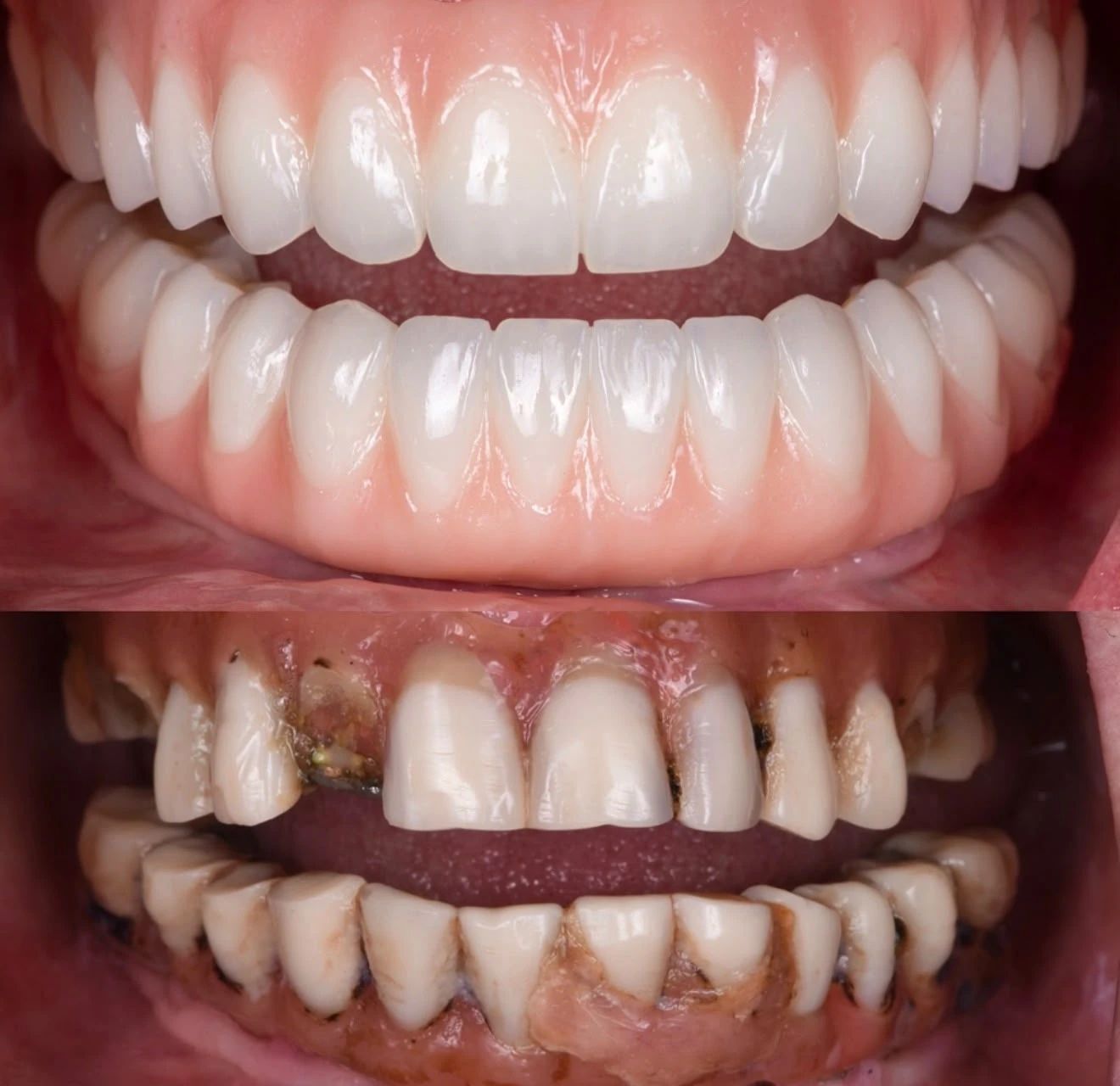
An important point for patients is that a problem with the teeth does not automatically mean the dental implants themselves have failed. In suitable cases, healthy existing implants may still be used to support a newly designed zirconia restoration.
Changing the restoration also gives the dental team an opportunity to reassess the smile, tooth proportions, bite and overall appearance rather than simply copying the old prosthesis.
Why Do Acrylic Implant Teeth Sometimes Break?
Acrylic is softer than zirconia. Over years of chewing, the material may gradually wear or fracture. Possible contributing factors include:
- Strong biting forces
- Teeth grinding or clenching
- Years of normal wear
- The thickness of the material
- The design of the prosthesis
- The patient's bite
- Implant position and distribution
Does Zirconia Last Longer Than Acrylic?
In general, zirconia is much more resistant to wear than acrylic. Because acrylic is softer, years of chewing can gradually change the shape and surface of the teeth. Zirconia maintains its shape and polished surface much better.
Clinical research has also reported favorable survival and lower wear-related complications with zirconia full-arch restorations.
However, no dental restoration lasts forever. How long implant-supported teeth last also depends on the health of the implants, prosthetic design, bite, oral hygiene, teeth grinding and regular maintenance.
Can Zirconia Teeth Break?
Yes. Zirconia is extremely strong, but no dental restoration is completely unbreakable.
Patients who grind or clench their teeth or generate very strong biting forces require careful treatment planning regardless of which material is selected. This is why the bite and design of a full-arch restoration are just as important as the material itself.
Which Looks Better: Zirconia or Acrylic?
Both materials can produce an attractive smile when properly designed. Zirconia provides excellent color stability and allows detailed control over the shape, color and texture of the teeth.
Modern digital technology allows the smile to be planned before the final restoration is manufactured. We can evaluate:
- Tooth size
- Tooth shape
- Smile line
- Tooth color
- Lip support
- Gum appearance
- Facial proportions
The goal is not simply to make very white teeth. The goal is to create teeth that look natural and appropriate for the patient's face.
Does Zirconia Feel Different From Acrylic?
Yes. Acrylic is a softer resin material, while zirconia is a dense dental ceramic. Many patients describe zirconia as feeling smooth and solid. However, because zirconia is rigid, careful design of the patient's bite is particularly important.
What About Same-Day Dental Implants?
If you receive fixed teeth on the same day as dental implants, those teeth are usually provisional rather than the final zirconia teeth.
In suitable patients, implants can be placed and a fixed temporary bridge can sometimes be delivered on the same day. This means the patient can leave with fixed teeth instead of a removable denture. After healing, the final restoration can then be designed.
- 01Implant day
- 02Dental implants placed
- 03Fixed temporary teeth
- 04Healing period
- 05Final zirconia teeth
The temporary teeth are also useful because they allow us to evaluate the smile, speech, bite, tooth position and cleaning access before manufacturing the final restoration. To understand the clinical factors involved, read about who is suitable for immediate-load full-arch implants.
Can I Replace My Existing Acrylic Implant Teeth With Zirconia?
In many cases, potentially yes. If you already have full-arch dental implants and your acrylic teeth have become worn, fractured or repeatedly repaired, it may be possible to replace the prosthesis with zirconia without replacing the implants.
Before making that decision, we evaluate:
- The health of the existing implants
- Implant positions
- The condition of the implant components
- Available restorative space
- The patient's bite
- Teeth grinding
- Why the previous restoration failed
If the existing implants are healthy and appropriately positioned, they may be able to support a newly designed zirconia prosthesis.
Is Zirconia Always Better Than Acrylic?
No. Metal-acrylic teeth still have important advantages. They are easier to repair and usually have a lower initial cost. For some patients, acrylic may still be the appropriate choice.
For other patients — particularly when long-term wear resistance, color stability and reduced maintenance are priorities — zirconia can be an excellent option. The decision should be based on the individual patient's situation rather than simply choosing the more expensive material.
How Do I Know Which One Is Right for Me?
There is no single answer for everyone. Before recommending zirconia or acrylic, we consider:
- Existing implants
- Bone and gum health
- Bite
- Smile
- Available space
- Opposing teeth
- Teeth grinding or clenching
- Aesthetic expectations
- Maintenance requirements
- Budget
Successful full-mouth implant treatment depends on much more than choosing a material. The position of the implants, design of the teeth, bite and quality of the treatment planning are equally important.
Full-Arch Dental Implants and Zirconia Teeth in Riyadh
At Confident Dental Clinic in Riyadh, Dr. Adnan Bazarbashi focuses on prosthodontics, implant dentistry, full-mouth rehabilitation and digitally planned full-arch implant treatment.
Modern digital workflows can be used to combine 3D imaging, digital scanning, implant planning, provisional fixed teeth and CAD/CAM manufacturing of the definitive restoration.
For suitable patients, implants and fixed provisional teeth can sometimes be provided on the same day. The final restoration is then designed after healing according to the patient's individual clinical situation.
Frequently Asked Questions
Which is better for full-mouth dental implants: zirconia or acrylic?
For many patients, zirconia offers greater resistance to wear and staining. Metal-acrylic remains a useful treatment option and has the advantage of generally being easier to repair.
Do acrylic implant teeth break?
They can. Acrylic teeth may wear, chip or fracture over time, particularly in patients with strong biting forces or teeth grinding.
Can I replace acrylic implant teeth with zirconia?
Often, yes. If the existing implants are healthy and appropriately positioned, it may be possible to keep the implants and replace the prosthesis.
Do I need new implants to change from acrylic to zirconia?
Not necessarily. A problem with the prosthesis does not automatically mean the implants have failed. Clinical and radiographic evaluation is required.
Are zirconia implant teeth stronger than acrylic?
Zirconia is a very strong dental ceramic and is significantly more resistant to wear than acrylic.
Can zirconia teeth break?
Yes. Zirconia is extremely strong, but no dental restoration is completely unbreakable.
Are zirconia teeth more expensive?
Usually, yes. Zirconia generally has a higher initial cost because of the material, digital design and manufacturing involved.
Can zirconia be used with All-on-4 implants?
Yes, zirconia can be used in many All-on-4 and other full-arch implant cases. The implant positions, available space, bite and overall prosthetic design must first be evaluated.
Can I get permanent zirconia teeth on the same day as my implants?
Usually the fixed teeth provided on the day of implant placement are provisional. The definitive zirconia restoration is typically manufactured after an appropriate healing and evaluation period.
What should I do if my acrylic implant bridge keeps breaking?
The first step is to determine why it is breaking. The implants, bite, prosthetic design, available space and teeth-grinding habits should be evaluated before simply replacing the restoration with a stronger material.
The Bottom Line
If you are choosing between zirconia and metal-acrylic teeth for full-arch dental implants, both materials can work successfully.
Acrylic is easier to repair and generally less expensive, but it is more susceptible to wear, chipping and fracture over time. Zirconia provides excellent strength, wear resistance, color stability and aesthetics, but usually has a higher initial cost and can be more difficult to repair.
For patients who have experienced repeated fractures of acrylic implant teeth, switching to zirconia may be worth considering — but only after understanding why the previous restoration fractured.
The best results come from combining the right material with the right implant positions, bite, prosthetic design and treatment planning.
This article is intended for patient education and does not replace an individual clinical examination and treatment plan. Treatment options and outcomes vary according to each patient's clinical situation.